Key takeaways
- Different animals make different sounds and signs.
- Never block the entry hole before you know the animal is out.
- Spring and summer mean babies may be inside, so call a professional.
- Repairs after removal keep animals from returning.
What is up there
Squirrels are active by day with scratching and rolling sounds. Raccoons thump and chitter at night. Rats scurry and gnaw at night, and bats flutter at dusk. Droppings, stains and chewed wiring help identify the animal.
Take photos and notes to share.
What not to do
Do not seal the hole without knowing the animal has left, since trapped animals die or chew new ways out and babies may starve. Do not use mothballs or poison. Do not enter an attic with fresh droppings without protection.
Wildlife has legal protections in Tennessee.
Humane removal
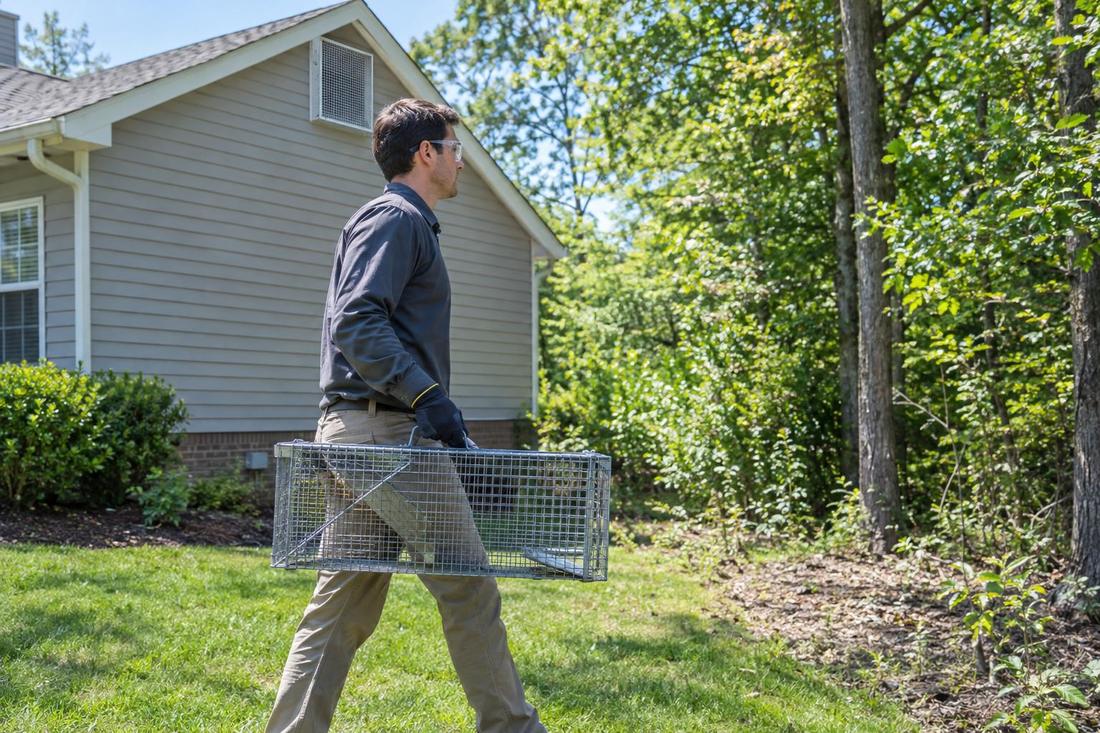
Professionals use one-way doors and live traps, protect and reunite young where possible and follow state rules. Bats require special timing and exclusion. The Tennessee Wildlife Resources Agency has information about wildlife laws.
Ask a company about their methods.
Repair and clean up
After the animals are out, entry points are repaired with metal and mesh, droppings and soiled insulation are removed and the space is sanitized. Tree trimming and chimney caps help keep animals out.
Insulation may need replacing.
Official sources and further reading
- Tennessee Wildlife Resources Agency
- University of Tennessee Extension
- National Pest Management Association
These are independent organizations. Links open in a new tab.
Quick answers
Is wildlife removal legal for homeowners?
Rules vary by species. A professional follows the law and keeps you protected.
Will animals return?
Not if every entry point is repaired.