Key takeaways
- Mud tubes, swarmers and discarded wings are the most common clues.
- Wood that sounds hollow or looks blistered may be damaged from inside.
- Moisture problems and wood near soil make termites more likely.
- A professional inspection confirms activity and the right treatment.
Mud tubes and swarmers
Subterranean termites build pencil-width mud tubes on foundations and walls to travel safely. In spring, winged swarmers may emerge indoors or near windows and leave small, equal-length wings behind. Seeing either is a reason to call.
Carpenter ants leave sawdust-like frass instead.
Wood damage
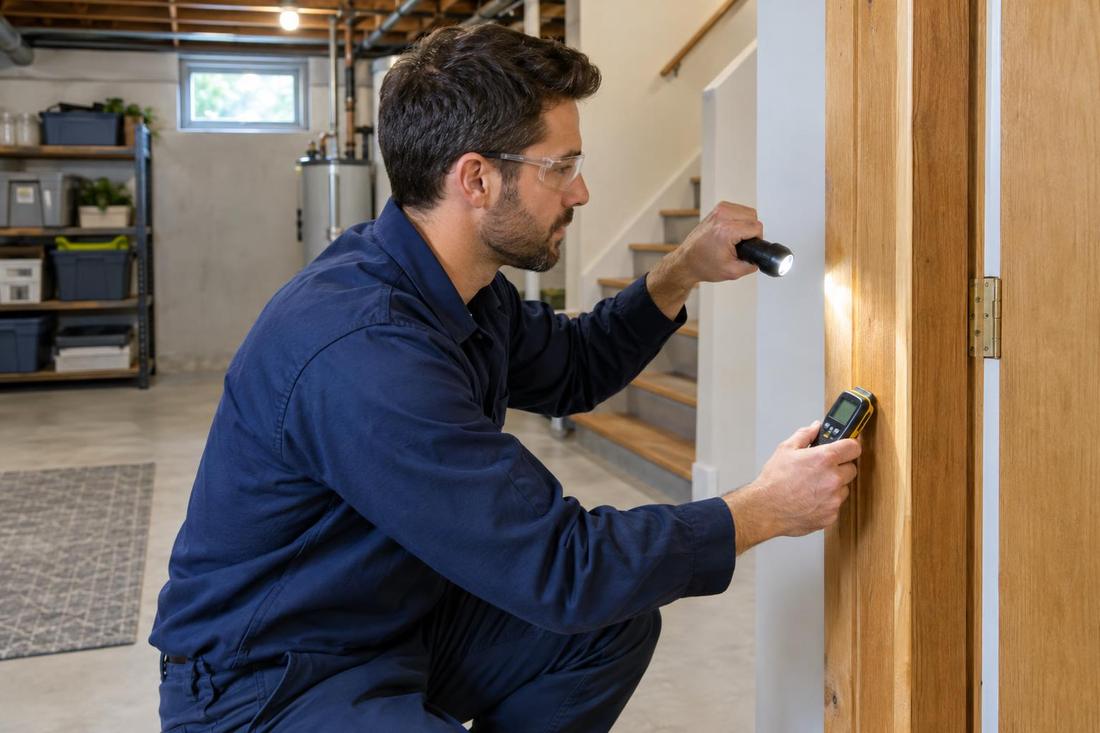
Termites eat wood from the inside, so the surface may look fine while the inside is hollow. Tap suspect wood and listen for a papery or hollow sound. Blistered paint, sagging floors and doors that stick can also be clues.
Do not poke deep into structural wood.
Where termites like to be
Termites need moisture and food. Wood touching soil, leaky pipes, clogged gutters, wet crawl spaces and mulch piled against siding all raise risk. Fixing moisture helps prevention and treatment.
Keep firewood away from the house.
What to do next
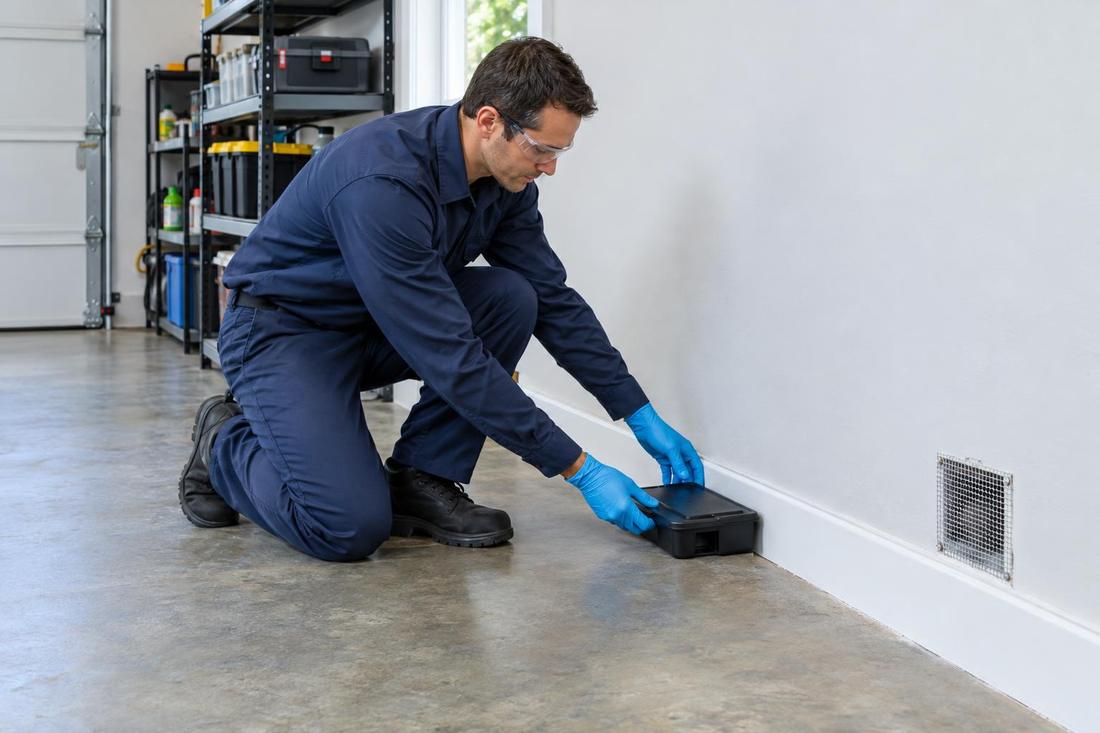
If you see signs, take photos, do not disturb the area and schedule an inspection. A professional will confirm the species, find the extent and recommend baits, liquid treatment or both. Yearly inspections catch activity early.
Ask for a report with photos.
Official sources and further reading
These are independent organizations. Links open in a new tab.
Quick answers
How fast do termites cause damage?
It varies by colony size. Damage builds quietly over months and years.
Is termite damage obvious?
Often not until it is advanced, which is why inspections matter.