Key takeaways
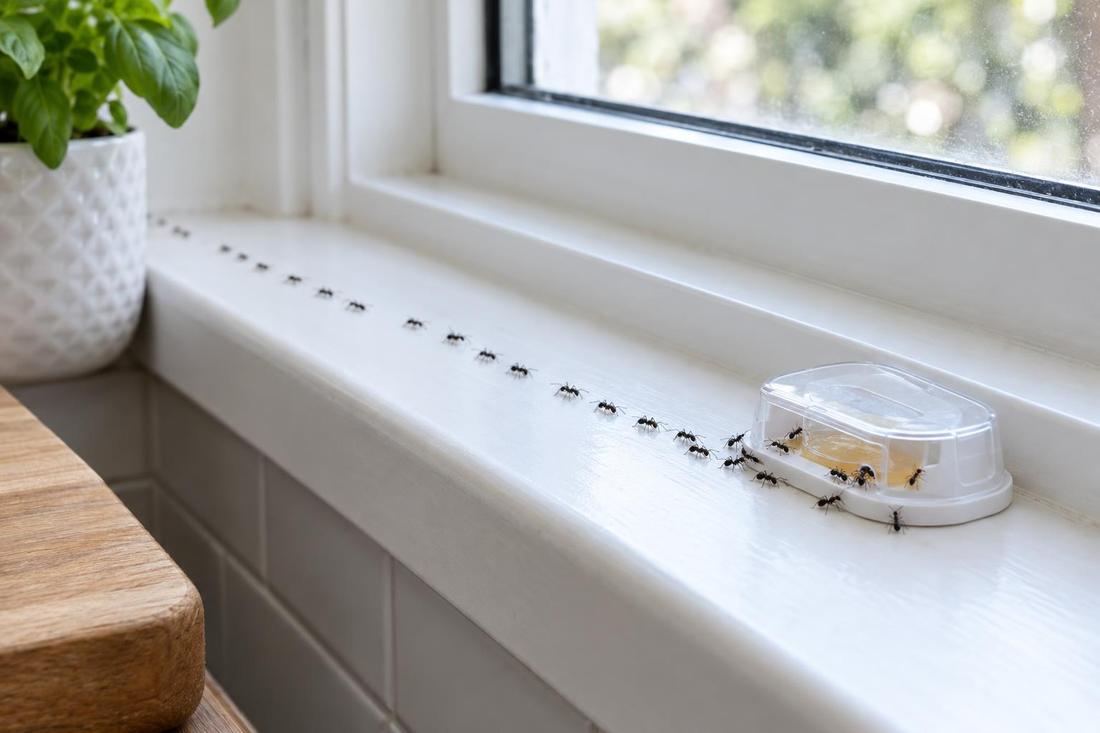
- Ants follow scent trails to food and water.
- Wipe trails with soapy water and store food in sealed containers.
- Baits work better than sprays because they reach the colony.
- Seal entry points and fix moisture to keep ants from returning.
Why ants come in
Scout ants find crumbs, sweet spills or pet food, then leave a scent trail so workers can follow. Rain and dry spells push colonies indoors to find water. Even a clean kitchen can attract ants.
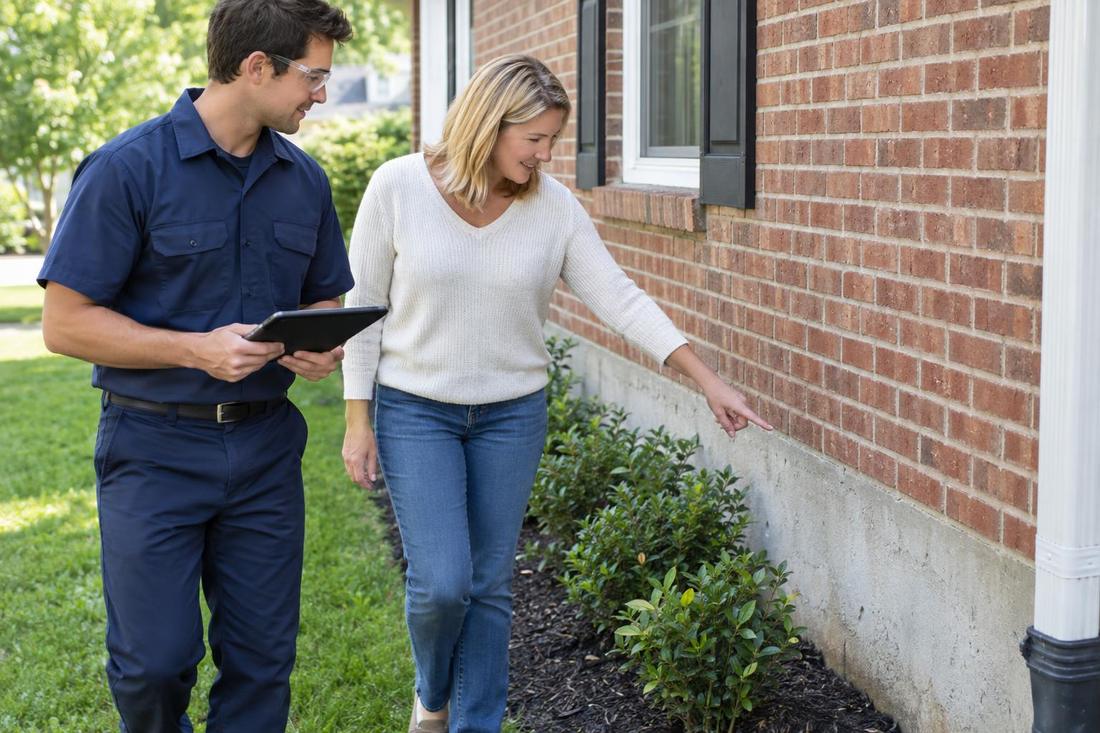
The nest is often outside near the foundation.
What to do right now
Wipe trails with soapy water to break the scent, clean spills, store food in sealed containers, rinse recyclables and keep pet food covered. Do not spray ants you see. Sprays kill workers but can scatter the colony.
Take a photo for identification.
Baits and colony treatment
Slow-acting baits are carried back to the nest and share through the colony. Place baits near trails and let ants feed. A professional can identify the species and use baits and treatments that match.
Patience helps. Baits may take days to work.
Keep them from returning
Seal gaps around pipes, windows and doors, repair leaks, trim vegetation touching the house and keep mulch below siding. Regular exterior service stops many colonies before they come inside.
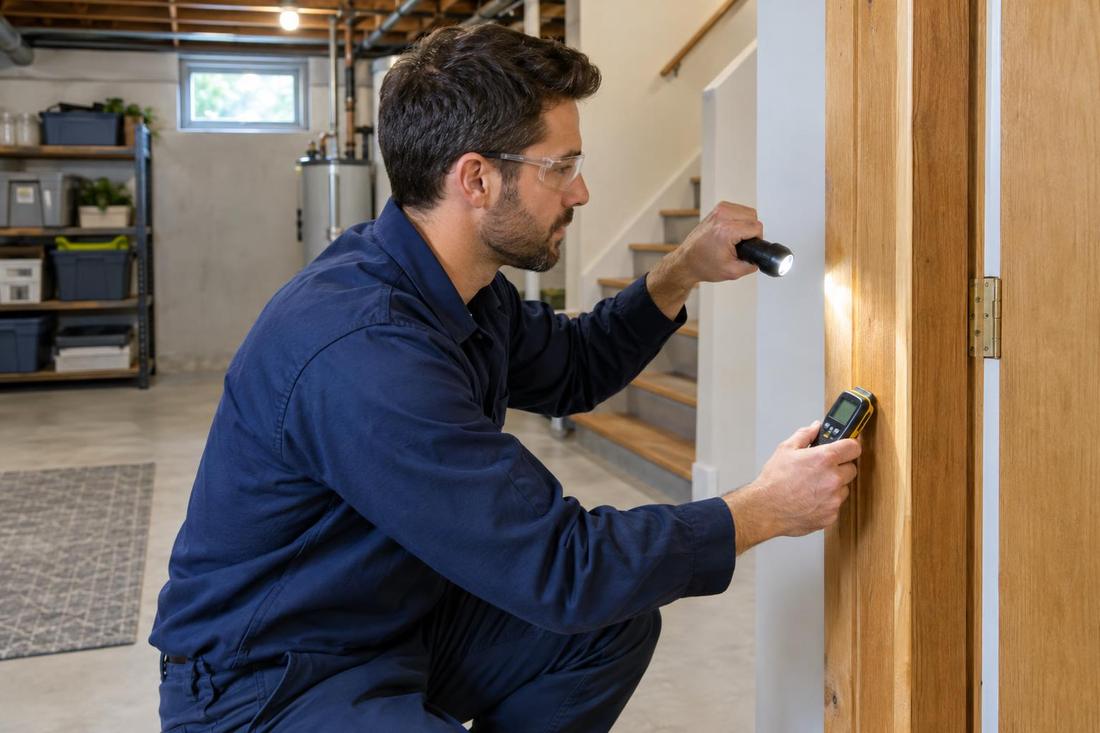
A pest plan covers these steps.
Official sources and further reading
These are independent organizations. Links open in a new tab.
Quick answers
Why do ants come back after spraying?
The colony remains. Baits and exterior treatment target it.
Are sugar ants a different kind?
The term is used for several species. Identification helps choose the right method.